
Whether you’re managing SIBO, IBS, Crohn’s, or other digestive issues, the holiday season can be a challenging time for your gut. Don’t let the fear of missing out on festive feasts dampen your holiday spirit! Discover how opting for gut-friendly foods and embracing a Low-FODMAP diet can transform your holiday experience. This article is your go-to guide for navigating food sensitivities during Thanksgiving, Friendsgiving, office parties, and Christmas dinners.
What Is A Low-FODMAP Diet?
FODMAP is an acronym for a group of short-chain carbohydrates (aka sugars) that can be hard to digest:
Fermentable — Foods that your gut converts to gasses.
Oligosaccharides — Things like onions, garlic, beans, and wheat products.
Disaccharides — Think lactose, the sugar found in milk.
Monosaccharides — The sugar found in fruit, aka fructose.
And Polyols — Sugars found in artificial sweeteners and some alcohols.
For some individuals, consuming high-FODMAP foods can result in uncomfortable symptoms like gas and bloating, cramping, diarrhea, or constipation. Here’s why: your gut bacteria have certain foods they prefer over others (like high-FODMAP ones), and when they get those foods, they produce more gasses. The top foods that bacteria love are fermented goods such as cheese, kombucha, and sauerkraut, or foods rich in sugar and fiber.
A clinician may recommend a time-limited low-FODMAP trial for some people with IBS symptoms, followed by guided reintroduction. It is not a test for SIBO or a promise to repair the gut. Ask whether this approach fits YOUR needs.

The Naughty List: High-FODMAP Foods To Avoid
The Foods:
For individuals with IBS, SIBO, or other gut sensitivities, you’ll want to pass the plate and steer clear of stuffing, gravy, and casseroles containing onions and garlic, creamy sauces, dairy products, cheesy dishes, and high-FODMAP sides such as beans, lentils, chickpeas, cauliflower, Brussels sprouts, and mushrooms.
The Drinks:
Carbonated drinks (like sodas, champagne, and beers) can contribute to bloating, so be mindful with your consumption. You’ll also want to avoid drinks that are fermented (such as rum or hard ciders) and drinks which contain high-fructose corn syrup or high amounts of added sugar. Additionally, if you’re reaching for that cup of coffee or tea, you may want to drink it straight. Some artificial sweeteners may cause an upset stomach!
The Desserts:
What about the pumpkin or apple pie!? The devil is in the details… While pumpkin may be enjoyed in moderation, apples are considered a high-FODMAP fruit. Homemade pie recipes can be modified to make them more suitable for your specific dietary needs, such as using a gluten free crust, lactose-free or non-dairy alternatives, and moderate amounts of sweeteners.
The Nice List: Low-FODMAP Foods To Enjoy
The Foods:
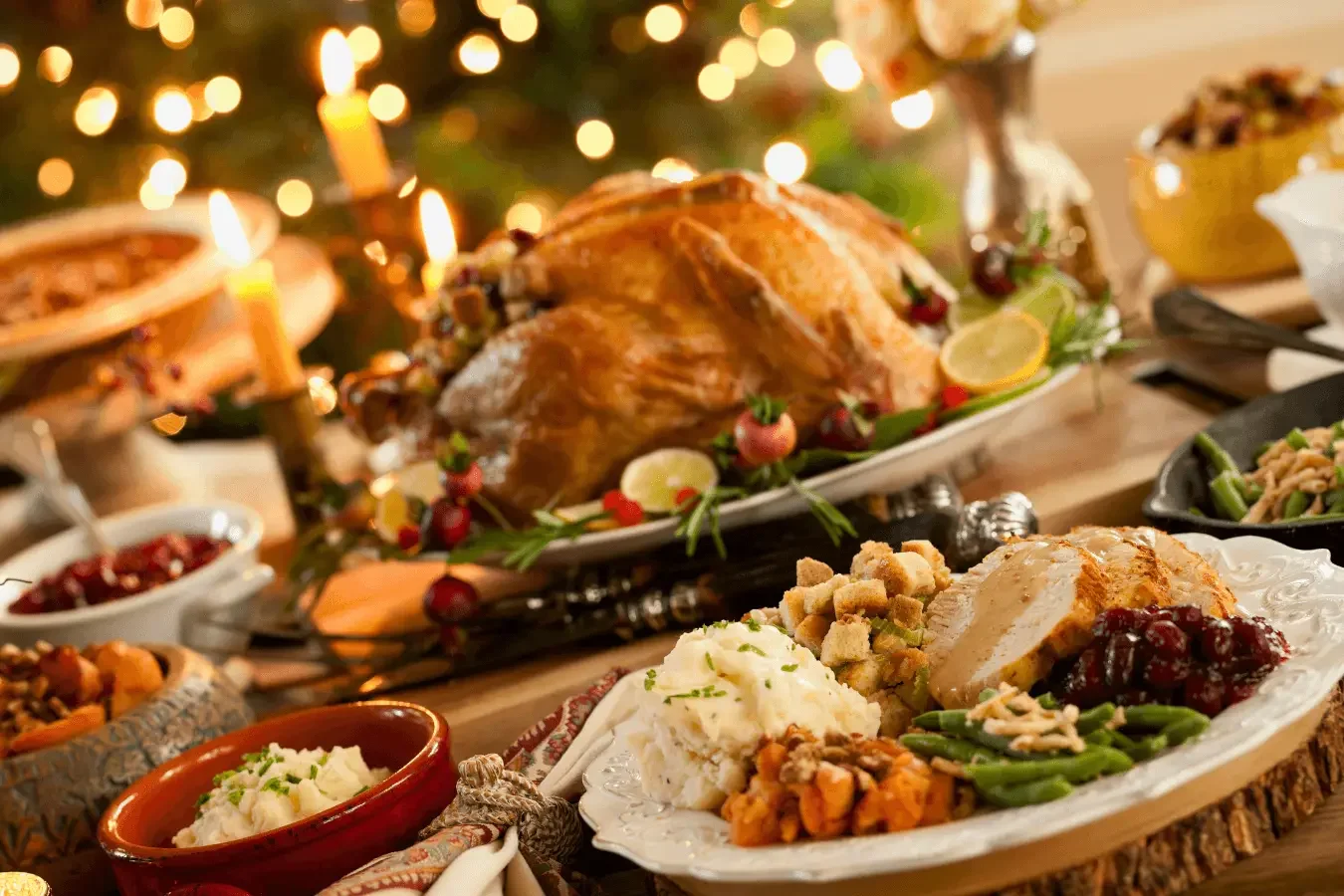
Gut-friendly holiday classics include roasted turkey, baked chicken, and fish for protein. Modifications don’t have to mean flavorless, either. You can season with sage, thyme, rosemary, and cinnamon. Side dishes include green beans, lactose-free mashed potatoes, roasted carrots, quinoa stuffing, and gluten-free rolls. In moderation, cranberries, raspberries, blueberries, and strawberries can be enjoyed too!
The Drinks:
Sip into the holiday spirit with caffeine-free peppermint tea! Not only is the flavor great, but peppermint tea is known for its gut-soothing properties, aiding in digestion and easing symptoms of gas, bloating, and indigestion. The best drink of them all is water, but you can also enjoy orange and cranberry juice, coffee, black tea, and green tea.
What about alcohol? Gin, vodka, and whiskey are in the clear — but you just want to make sure any mixers you add don’t contain high amounts of sugar or high fructose corn syrup. One glass of red, sparkling, or white wine is low-FODMAP, since grapes are a low-FODMAP fruit. However, larger servings of wine can increase your fructose intake and increase digestive symptoms. If alcohol historically has not been your friend, you may just want to avoid it to enjoy the rest of your meal!
The Desserts:
If you’ve got a favorite dessert in mind, chances are there is a recipe online that is low-FODMAP, gluten-free, dairy-free, and will work for you and your dietary needs! For example, pumpkin pie, berry parfaits, chocolate-dipped strawberries, lemon sorbet, and peanut butter cookies are popular treats that can be made with modifications to satisfy that sweet tooth and keep your gut happy!

Let’s Plan Around YOUR Needs
Holiday food choices should make room for your symptoms, preferences and nutrition. Portion size, ingredients and individual tolerance matter; a recipe label alone cannot tell you how a meal will feel for you.
If restrictions are piling up or symptoms keep returning, explore digestive health and SIBO/IBS care in Boise. You can learn how to become a patient at ISAIH Natural Medicine and discuss a plan that fits YOUR life.
Further reading: NIDDK: Eating, Diet & Nutrition for IBS.